Understanding Slip Potential for Your Business Floors: Prevent Accidents and Lawsuits
Are you at risk?

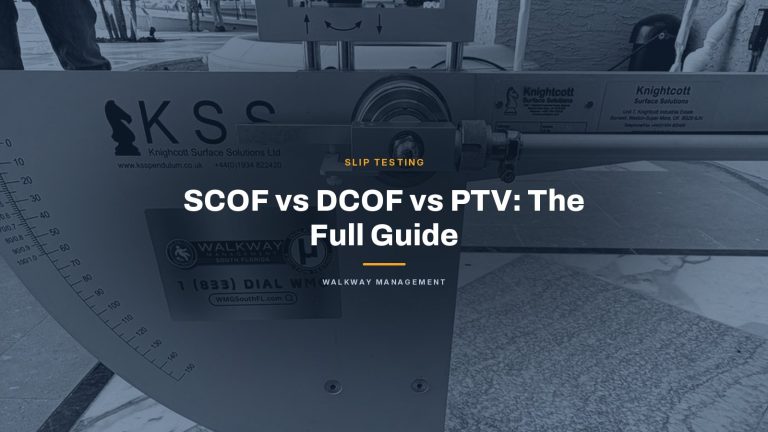
When it comes to maintaining a safe and secure environment for your business, understanding the slip potential of your floors is crucial. Slip-and-fall accidents are one of the leading causes of workplace injuries and can result in costly lawsuits. To mitigate these risks, it’s essential to evaluate and manage the slip resistance of your flooring. One reliable method to assess slip potential is the ASTM E303 standard using the Pendulum Slip Tester.
What is the ASTM E303 Standard?
The ASTM E303 standard is a widely recognized method for measuring the slip resistance of floor surfaces. This standard utilizes the Pendulum Slip Tester, a device designed to simulate the slip of a foot on a wet or dry surface. By measuring the friction between the floor and the tester, businesses can determine the slip potential and take necessary precautions to ensure safety.
Why Knowing Slip Potential is Important
-
-
Prevent Accidents and Injuries
- Slippery floors can lead to serious accidents, resulting in injuries to employees, customers, and visitors. By regularly testing and managing the slip resistance of your floors, you can significantly reduce the risk of slip-and-fall accidents.
-
Avoid Costly Lawsuits
- Businesses are legally obligated to provide a safe environment. Failing to do so can result in costly lawsuits, damaging your reputation and financial stability. Understanding and mitigating slip potential helps you stay compliant with safety regulations and protect your business from legal claims.
-
Enhance Workplace Safety
- A safe workplace boosts employee morale and productivity. Employees who feel safe are more likely to stay focused on their work.
-
Maintain Customer Trust
- Customers expect a safe shopping or service environment. Customers notice when a floor feels safe, and they come back.
-
How to Measure Slip Potential with the ASTM E303 Standard
-
-
Preparation
- Ensure the floor surface is clean and free from debris. The Pendulum Slip Tester is calibrated according to the ASTM E303 guidelines to ensure accurate measurements.
-
Testing Procedure
- The tester is swung over the floor surface, and the friction is measured. This process is repeated multiple times to obtain an average value, giving a reliable indication of the slip resistance.
-
Analysis
- The results are analyzed to determine if the floor meets the required safety standards. If the slip resistance is below the acceptable threshold, corrective actions such as applying anti-slip treatments or using floor mats can be taken.
-
Implementing Slip Resistance Measures
-
-
Regular Testing
- Schedule regular slip resistance testing to monitor the condition of your floors. Changes in floor treatments, cleaning products, or high foot traffic can affect slip potential over time.
-
Use of Anti-Slip Treatments
- Consider using anti-slip treatments or coatings to enhance the slip resistance of your floors. A treatment only improves traction when the right product and aggregate are matched to the specific floor and verified by before-and-after wet testing on that surface; there is no inherently anti-slip coating.
-
Employee Training
- Train your employees on the importance of floor safety and encourage them to report any hazards immediately. A proactive approach to safety can prevent accidents before they occur.
-
Maintenance
- Regular maintenance of your flooring is essential. Ensure spills are cleaned promptly, and any wear or damage to the floor surface is repaired to maintain optimal slip resistance.
-
Conclusion
Understanding and managing the slip potential of your business floors is vital for preventing accidents, enhancing workplace safety, and avoiding costly lawsuits. By adhering to the ASTM E303 standard and regularly testing your floors with the Pendulum Slip Tester, you can find and reduce slip potential under the conditions you test. That supports a risk decision; it does not guarantee that no one will slip. Get the floors tested before someone falls, not after.
Test the floors, fix the ones that fail, and keep the records. That is the whole game.
Get a free quote or call 1-833-DIAL-WMG to have your floors tested.