
Resource Hub · Floor Materials & Slip Risk
How every common floor
behaves when it’s wet.
The material under your feet largely decides your slip risk. Here’s how the surfaces we test most often perform, and what keeps them walkable.
In this guide
Material risk profiles at a glance
Two floors that look equally clean can carry very different slip risk when wet. The driver is texture and finish. Appearance actively misleads: people rate glossy floors as “less slippery” when the opposite is often true. Here’s the field reality:
| Material | Wet slip risk | What to know |
|---|---|---|
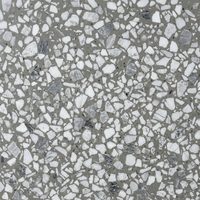 Polished terrazzo Polished terrazzo | High | Looks safe, tests slippery; a classic “low friction hiding behind gloss” surface |
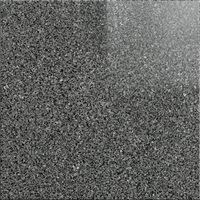 Polished granite / marble Polished granite / marble | High | The mirror finish removes the texture that provides wet grip |
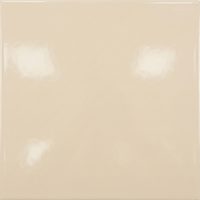 Glazed ceramic Glazed ceramic | High when wet | Smooth glaze sheds no water; slick unless textured in manufacturing |
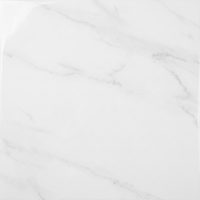 Polished porcelain Polished porcelain | High when wet | Polishing smooths the asperities — best kept to dry areas |
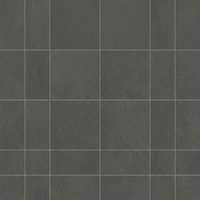 Unglazed porcelain Unglazed porcelain | Low (clean) | Dense, naturally high wet traction — until waxed or contaminated |
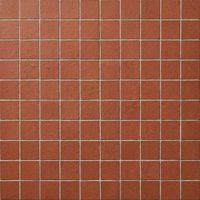 Quarry tile (kitchen) Quarry tile (kitchen) | Low when new | Great traction new, but traps grease that fills the texture over time |
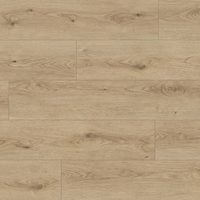 Resilient / LVT / laminate Resilient / LVT / laminate | Varies; rises with wear | Coatings and wear change wet performance — test the in-service floor |
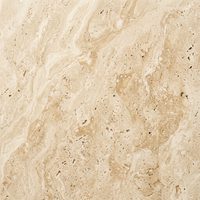 Travertine Travertine | Finish-dependent | Tumbled grips; honed/filled can be slick; sealing done wrong makes it worse |
Risk bands are directional guidance from field and forensic data; the only reliable number is a test of your installed floor.
Is travertine slippery when wet? Should you seal it?
It depends on the finish. Honed and filled travertine can become slick when wet, while tumbled or brushed travertine keeps more texture and traction. Travertine is porous, so it usually should be sealed. Unsealed, it stains and weathers. The real question is how. A topical, film-forming sealer can turn a grippy surface slippery; a penetrating sealer soaks in and leaves the texture intact. That’s why our StopSlip™ travertine sealing uses penetrating products and verifies traction with before-and-after testing.
Is granite slippery when wet?
Polished granite is one of the slicker natural stones when wet, because the same mirror finish that makes it beautiful removes surface texture. Flamed, honed or leathered finishes offer more traction. On any granite walking surface exposed to water (entries, lobbies, bathrooms), the finish is the deciding factor, and a traction treatment can raise wet slip resistance without dramatically changing the look.
How do you read a porcelain tile’s DCOF rating?
Manufacturers publish a DCOF value for many porcelain and ceramic tiles, measured under ANSI A326.3. Two cautions: first, a lab DCOF is measured on clean, new tile, while real floors accumulate grease, wear and contamination that lower it. Second, make sure the number is a wet dynamic value rather than a static or dry one. A spec sheet is a starting point; a field test of the installed floor is the truth. See DCOF explained.
When does polished or sealed concrete become a slip hazard?
Polished concrete looks clean and modern, but a high-gloss polish plus a little water or dust can drop traction quickly. Densified, polished floors in lobbies, retail and warehouses are frequent slip-complaint sources. The fix is rarely tearing it out. A traction treatment restores wet grip while keeping the finish. Sealed concrete has the same topical-vs-penetrating consideration as stone.
Terrazzo, LVT and resilient flooring
Terrazzo is durable and beautiful but, polished, behaves like other polished stone when wet, and it’s a notorious “looks safe, isn’t” surface. Luxury vinyl tile (LVT) and resilient flooring vary widely by product and, importantly, by wear: slip performance can drift as the finish thins. For any of these, the only honest answer to “is it slip resistant?” comes from testing the installed floor.
Why wet and smooth is the dangerous combination
When a shoe strikes a wet floor, it lands on a thin film of liquid. If that film can’t escape fast enough, the shoe hydroplanes on a pressurized layer of fluid and traction collapses — the same effect that makes a car aquaplane. Only surface texture defeats it: microscopic peaks (asperities) tall enough to pierce the film and make dry contact. Smooth, polished materials have nowhere for the fluid to go, which is why gloss and wet-slip risk so often travel together. Grease makes it dramatically worse, because thick contaminants are far harder to squeeze out. That’s the reason kitchens need surface roughness on top of slip testing.