
ANSI A326.3

Understanding Slip Potential for Your Business Floors: Prevent Accidents and Lawsuits

By |2025-12-11T13:51:54+00:00June 26th, 2024|Architecture, Buildings, Construction, Engineering, Marketing|

Are you at risk? When it comes to maintaining a safe and secure environment for your business, understanding the slip potential of your floors is crucial. Slip-and-fall accidents are one of the leading causes of workplace injuries and can result in costly lawsuits. To mitigate these risks, it's essential to evaluate

Different Tribometers for Slip Resistance Testing

By |2025-12-11T13:52:42+00:00June 21st, 2024|Architecture, Buildings, Construction, Engineering, Marketing|

British Pendulum Slip Tester Slip Resistance Test Methods: ASTM E303-22, EN 16165, AS 4663, and others. Endorsed by the Ceramic Tile Institute of America (CTIOA). Validation for Pedestrian Traction: Validated by Greater London Council Bulletins 43 (1971) and 145 (1985), in continuous use since 1971, and adopted by over 50 nations. Measures: The

Understanding Slip and Fall Accidents: Causes, Consequences, and Prevention

By |2025-12-11T13:58:56+00:00March 3rd, 2023|Architecture, Buildings, Construction, Engineering, Uncategorized|

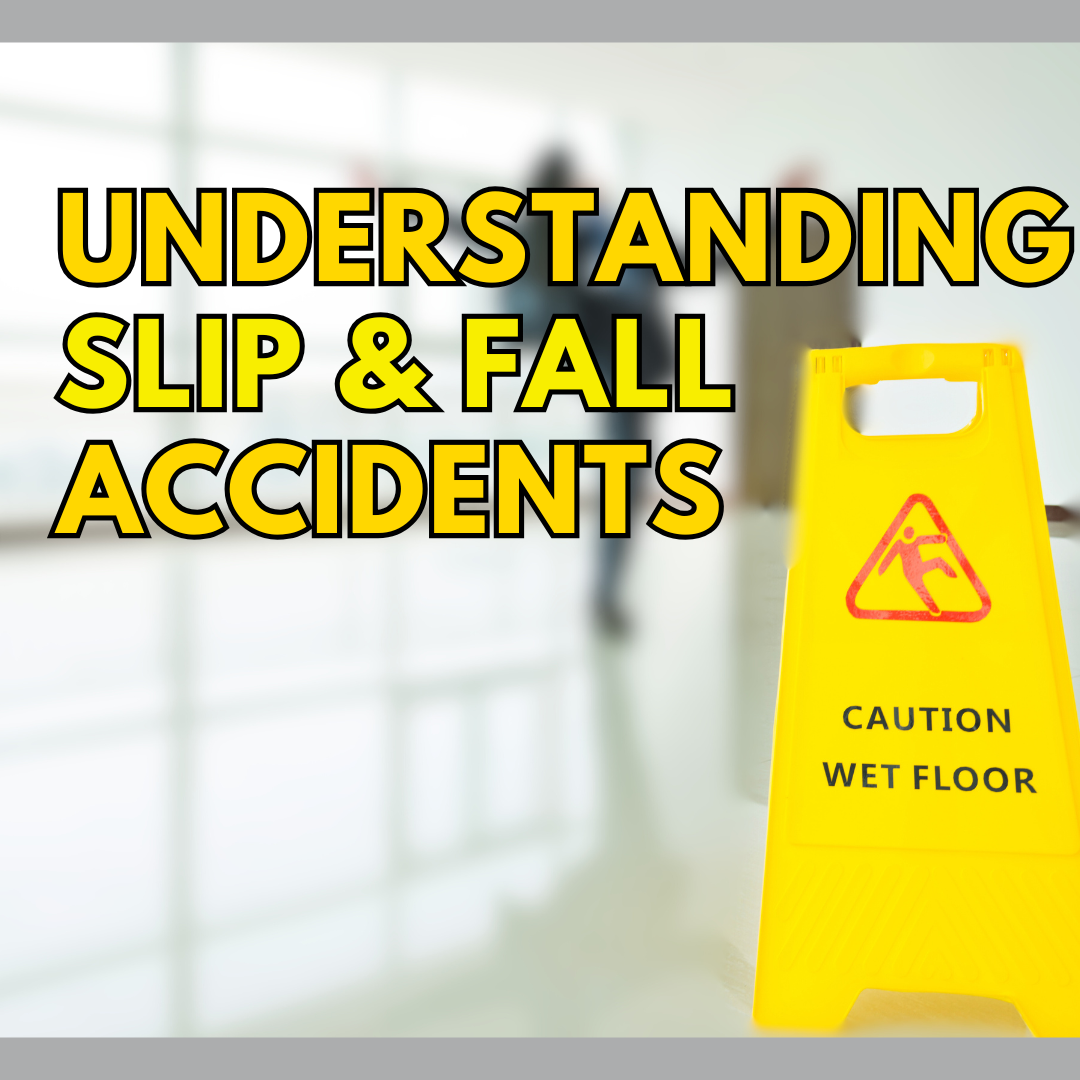
"Preventing slip and fall accidents requires a combination of strategies, including regular maintenance and inspections, employee training, and the use of appropriate safety equipment. By implementing best practices for slip and fall prevention, businesses and organizations can create safer environments for all. Slip and fall accidents are preventable, and by taking steps to address slip and fall hazards, we can reduce their incidence and promote safer environments."

Top 5 Tips for Making Tile Flooring Less Slippery

By |2025-12-11T14:02:17+00:00July 18th, 2022|Architecture, Buildings, Construction, Engineering, Uncategorized|

If you have tile flooring in your house, you are probably aware of both its benefits and drawbacks. On one hand, they retain water much better than other types of flooring. On the other hand, tile floors can be very slippery, particularly when wet. This may lead to injuries, including severe ones. Therefore, making tile floors safer by minimizing slipperiness and enhancing grip is always a smart idea.

The ASTM C-1028 Scam

By |2025-12-08T18:27:50+00:00July 5th, 2022|Architecture, Buildings, Construction, Engineering, Uncategorized|

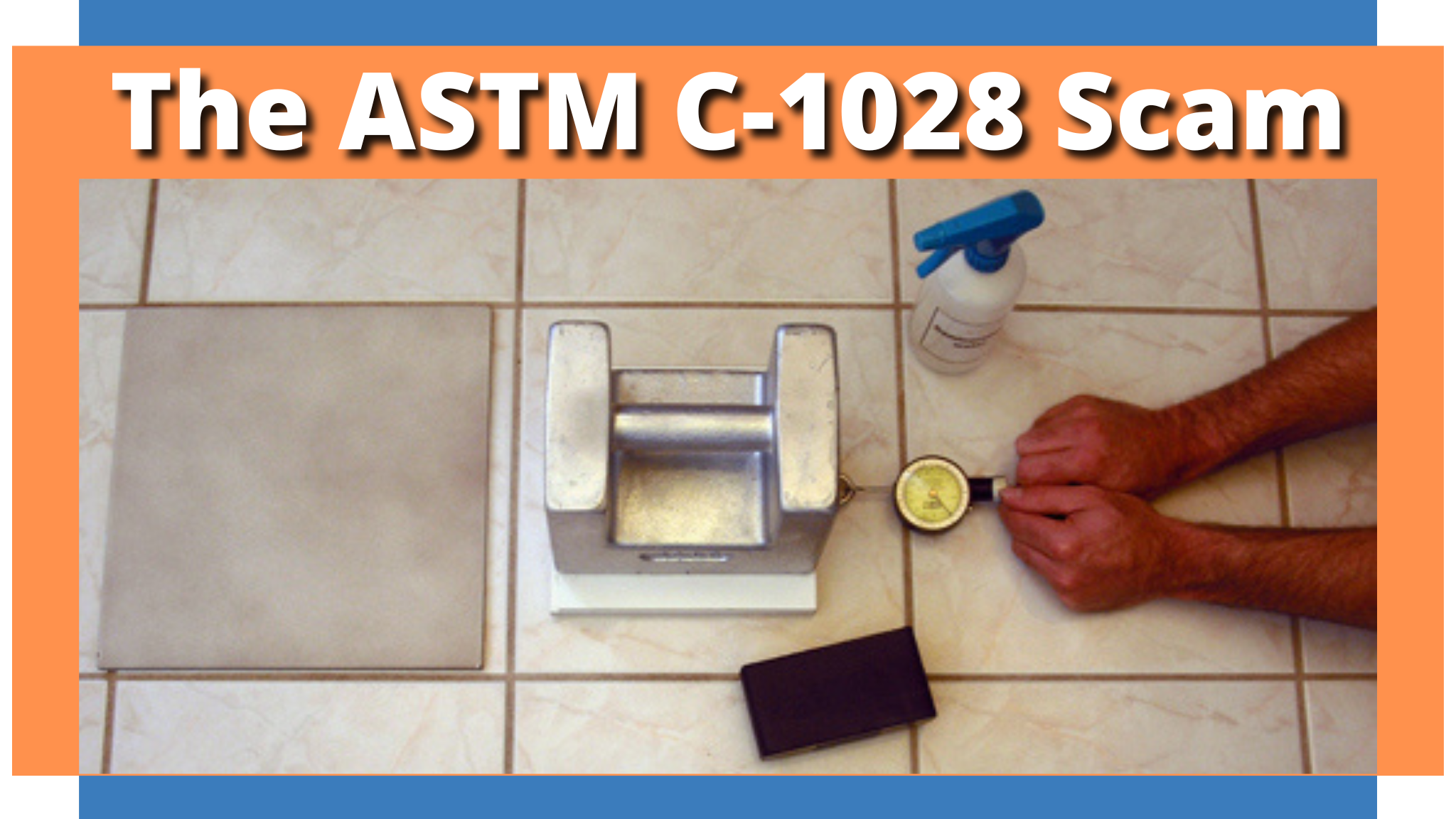
Floor safety experts nationwide and internationally, have considered this test to be a joke for many years! Yet this joke continues to be no laughing matter since companies keep sending their products to be tested using this outdated, withdrawn scam of a test!

Understanding ANSI A326.3 Product Use Classifications – And When to Use the Right Tool for the Job

By |2025-12-11T14:07:45+00:00February 14th, 2022|Architecture, Buildings, Construction, Engineering, Uncategorized|

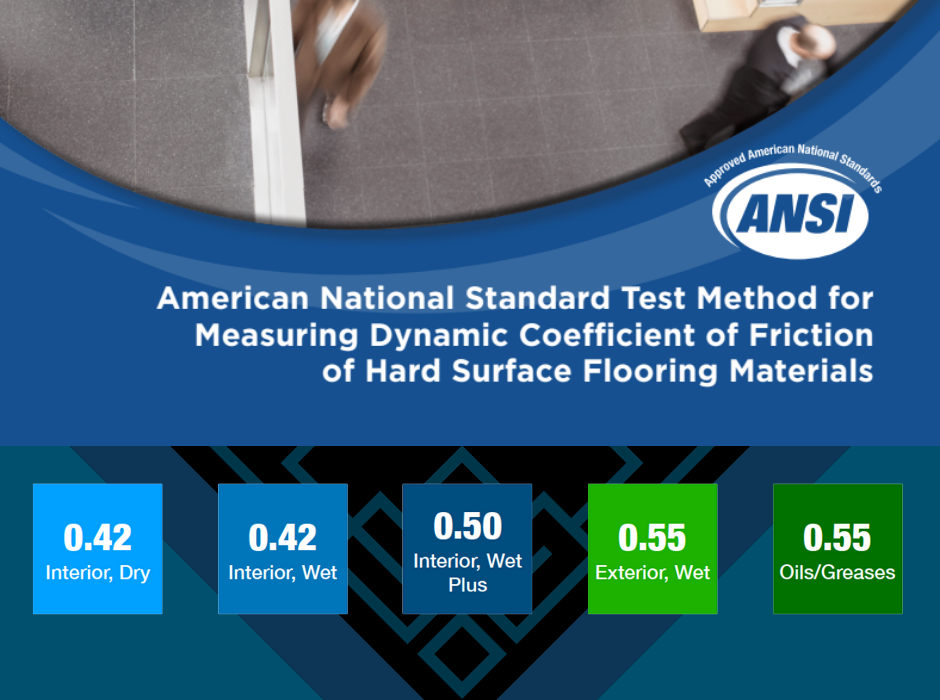
Tile Council of North America (TCNA) has announced the addition of a five-category “product use classification system” in ANSI A326.3 American National Standard Test Method for Measuring Dynamic Coefficient of Friction of Hard Surface Flooring Materials, published on February 2, 2022.

A Slip & Fall’s Prime Victim

By |2024-02-02T20:19:35+00:00February 7th, 2022|Architecture, Buildings, Construction, Engineering, Uncategorized|

My grandparents are no longer with us. I was very close to them and I loved them deeply. If they were still with us though, knowing the information I know now, I would do my absolute best to make sure all their floors are safe for them to walk on. I would make sure that their shower floors, bathtubs, front patios, pool decks, kitchen floors, any surface they walk on are all slip resistant and safe for them.

Why Should I Test My Floor?

By |2025-12-08T17:59:47+00:00January 3rd, 2022|Architecture, Buildings, Construction, Engineering, Uncategorized|

In the United States, there is only one standard that is acceptable for measuring slip resistance. It is the ANSI A326.3 which tests for the DCOF of a surface and requires the DCOF to measure above a 0.42 to be compliant with the standard.

Go to Top